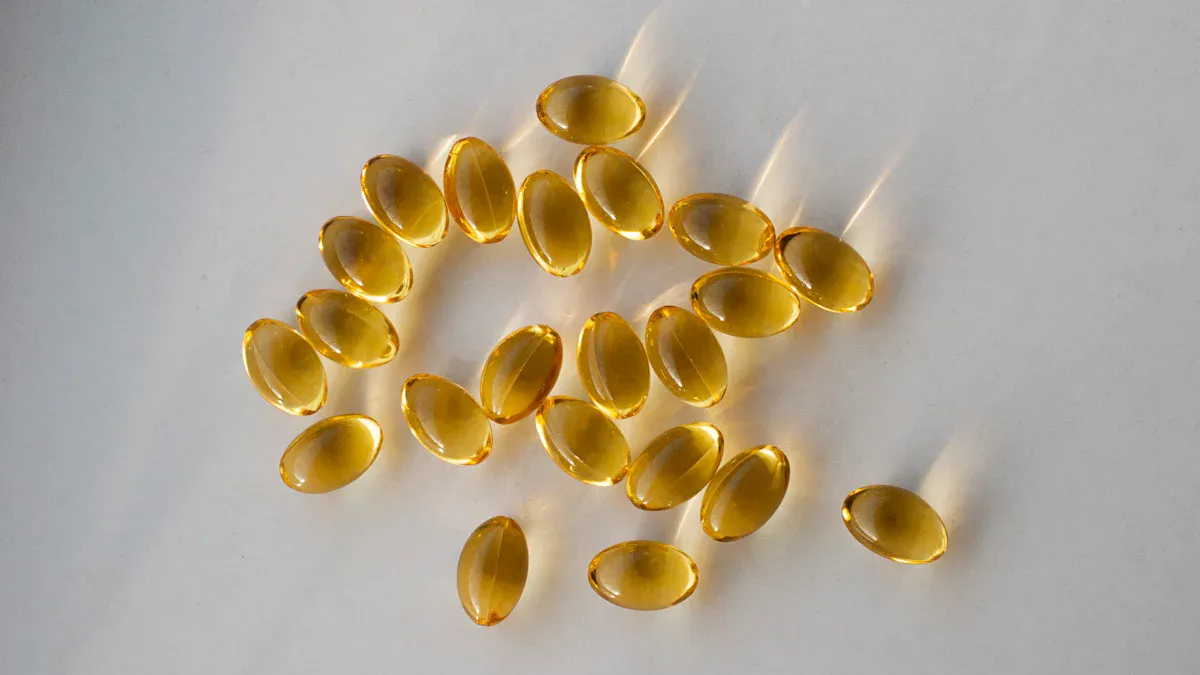
DPA in omega 3 means docosapentaenoic acid. It is a kind of omega-3 fatty acid. You can find DPA in fish oil. DPA works as a backup for other omega-3s like EPA and DHA. Most fish oil capsules have less DPA than EPA and DHA. For example, a 1g capsule has 180mg EPA, 120mg DHA, and only 20–50mg DPA. If you want to help your brain and heart, learning about DPA can help you make better food choices.
Component | Concentration in Fish Oil | Notes |
|---|---|---|
EPA | 180mg | More than DPA |
DHA | 120mg | More than DPA |
DPA | 20–50mg | About 10–20% of EPA amount |
DPA, or docosapentaenoic acid, is a key omega-3 fatty acid in fish oil. It works as a backup for other omega-3s like EPA and DHA.
Eating fatty fish like salmon and mackerel two or three times a week can raise your DPA levels. This helps your heart and brain stay healthy.
DPA helps lower swelling in the body and cuts down triglycerides. This can lower your chance of heart disease and help your health overall.
When picking omega-3 supplements, choose ones with DPA, EPA, and DHA. This way, you get all the good things these fatty acids offer.
Talk to your doctor if you have health worries or need help with how much omega-3 you should take.
You may hear about omega-3 often, but dpa in omega 3 is less known. DPA stands for docosapentaenoic acid. It belongs to the group of omega-3 fatty acids. Scientists classify DPA as a derivative of EPA, which is another important omega-3. You can see how DPA fits in the pathway to DHA in the table below:
Classification | Description |
|---|---|
Omega-3 Fatty Acid | DPA is a derivative of EPA in the pathway to DHA. |
Metabolic Pathway | DPA is formed by adding two carbons to EPA, leading to DHA. |
DPA is a natural part of marine omega-3. You find it in fish oil, but it is not as common as EPA or DHA. DPA status in your body depends on how much marine omega-3 you eat.
DPA in omega 3 acts as a middleman between EPA and DHA. Your body can change DPA into EPA or DHA, depending on what it needs. This makes DPA a reservoir for both EPA and DHA. You can see how DPA works in the list below:
DPA is structurally similar to EPA and DHA, acting as a middleman between them.
It can retro-convert into EPA and elongate into DHA, depending on the body's needs.
This suggests that DPA serves as a reservoir for both EPA and DHA.
When you eat marine omega-3, you boost your dpa status. Fish oil supplements also help raise dpa status. DPA in omega 3 helps your body keep a balance of EPA and DHA. You may not realize it, but DPA plays a key role in how your body uses omega-3.
You need omega-3 for your health. DPA in omega 3 helps your body fight inflammation and lower triglycerides. Studies show that higher dpa status links to a lower risk of heart disease. DPA also supports your brain and body. Over the past thirty years, scientists found that DPA's health benefits are similar to EPA and DHA. DPA in omega 3 helps protect your heart and may lower your risk of dying from coronary heart disease.
You can improve your dpa status by eating more marine omega-3. Salmon, mackerel, and sardines are good sources. Fish oil supplements also help. If you want to support your heart and brain, pay attention to your dpa status.
You may know that omega-3 fatty acids include epa, dha, and dpa. These three have different structures and roles in your body. Here is how they compare:
dpa has 22 carbon atoms and 5 double bonds. Scientists call it 22:5n-3.
epa has 20 carbon atoms and 5 double bonds. It is known as 20:5n-3.
dha has 22 carbon atoms and 6 double bonds. Its name is 22:6n-3.
Your body can turn epa into dpa, and then dpa into dha. If needed, dpa can also change back into epa.
epa helps your heart by making anti-inflammatory molecules. It also helps control blood fats and keeps your blood from clotting too much. dha is important for your brain and eyes. It helps your brain cells work well and keeps your vision sharp. dpa acts as a backup for both epa and dha. It is less studied, but it helps your body keep a balance of these important fats.
dpa stands out from other omega-3s because of its special properties. You can see some differences in the table below:
Unique Property | DPA | EPA | DHA |
|---|---|---|---|
Inhibits platelet aggregation | More efficient | Less efficient | Less efficient |
Incorporation into cells | Faster | Slower | Similar to DPA |
Oxidation rate | Less oxidized | More oxidized | More oxidized |
Role in inflammation | Major role | Indirect effects | Direct effects |
Metabolic flexibility | Can convert to EPA/DHA | Can convert to DPA | Can convert from DPA |
dpa helps stop blood cells from sticking together better than epa or dha. It also gets into your cells quickly and stays there longer. This means your body can save dpa for when it needs it. dpa also helps lower inflammation and improve how your body uses fats.
Your brain needs omega-3 to stay healthy. dha is the most common omega-3 in your brain. epa is there too, but in much smaller amounts. dpa is not as common as dha, but it is more common than epa. Scientists found that people with higher dpa levels have a lower risk of stroke. This means dpa may help protect your brain, especially as you get older.
Tip: Eating more fish or taking omega-3 supplements can help you get enough dpa, epa, and dha for your brain and body.
You can find DPA in many types of seafood. Omega-3-rich fish like salmon, mackerel, sardines, herring, and anchovies give you the most DPA. Eating these fish two or three times a week can help raise your DPA levels. For example, 100 grams of raw salmon can give you up to 393 mg of DPA. Seal oil has even more DPA than most fish, but you may not see it in stores often.
Tip: Try to include a variety of fatty fish in your meals. This helps you get more omega-3 and supports your heart and brain.
Fish oil supplements are a common way to add omega-3 to your diet. Most standard fish oil capsules have about 20–50 mg of DPA. The amount can change based on the type of fish used and how the supplement is made. Seal oil supplements have more DPA than regular fish oil. Some prescription omega-3 oils do not have DPA, so check the label if you want this fatty acid. Full-spectrum liquid fish oils often give you a wider range of omega-3s, including DPA.
Supplement Type | Average DPA Content (per serving) |
|---|---|
Standard Fish Oil | 20–50 mg |
Seal Oil | Higher than fish oil |
Prescription Omega-3 | Often none |
Full-Spectrum Fish Oil | Varies, includes DPA |
You can boost your DPA levels by eating more omega-3-rich fish or by taking a supplement. Try to eat fatty fish like salmon or mackerel each week. If you do not like fish, fish oil supplements can help. Krill oil and algal oil also give you omega-3, but algal oil has less DPA. Choose products that list DPA on the label for the best results.
Note: Your body can also make DPA from EPA, so eating a variety of omega-3 sources helps keep your levels steady.
You may wonder how dpa in omega 3 helps your body fight chronic inflammation. DPA works with EPA and DHA to lower inflammation in your cells. When you eat foods rich in omega-3, you give your body tools to reduce swelling and pain. DPA stops blood cells from sticking together, which helps your blood flow better. This action lowers your risk of blood clots. DPA also helps your body use fats in a healthy way. You can see these benefits when you eat fish or take fish oil supplements with high EPA and DHA content.
DPA in omega 3 helps your body respond to injury and stress. You may notice less swelling and faster healing when you get enough omega-3.
You want to protect your heart and brain as you grow older. DPA, EPA, and DHA work together to support these organs. DPA helps keep your blood vessels flexible. It lowers your risk of heart disease by improving how your body uses fats. When you replace saturated fats with omega-3, you lower your chance of heart problems. Eating more omega-3 polyunsaturated fatty acids links to fewer cardiovascular events.
DPA in omega 3 supports your heart by lowering triglycerides.
EPA and DHA content in fish oil helps your brain stay sharp.
DPA protects your brain cells and may lower your risk of stroke.
You get cardiovascular benefits when you eat fatty fish or take omega-3 supplements.
DPA helps your body grow and develop, especially in early life.
You can boost your heart and brain health by eating salmon, mackerel, or sardines. These fish have high EPA and DHA content and also give you DPA.
DPA acts as a reservoir for EPA and DHA. Your body uses DPA to keep a balance of omega-3 fatty acids. When your cells need more EPA, DPA can change into EPA. If your cells need more DHA, DPA can turn into DHA. This flexibility helps your body stay healthy.
DPA acts as an intermediary between EPA and DHA in metabolic pathways.
DPA can convert into DHA when cells require more long-chain DHA.
DPA can also convert into EPA when cells need more EPA, functioning as a flexible substitute.
Research shows that DPA can retroconvert to EPA. This means DPA supports your body's metabolic needs by keeping essential fatty acids balanced. You get these benefits when you eat foods with omega-3 or take supplements.
DPA in omega 3 gives your body a backup supply of EPA and DHA. You can rely on DPA to help your body adjust to changing needs.
You might ask if you should take dpa supplements. People who do not eat seafood often have low omega-3 levels. This group includes vegetarians, vegans, and people with seafood allergies. If you are in one of these groups, a supplement could help you. Pregnant and breastfeeding women need more omega-3 for their baby’s brain and eyes. People with heart problems or those worried about memory loss may also benefit. Studies show that higher dpa levels can lower your risk of heart disease and heart attacks. Taking dpa can help your heart, brain, and mental health.
Pregnant and breastfeeding women
People with heart problems
Those worried about memory loss
People with mental health issues
People who do not eat much seafood
When you choose a supplement, look for one with epa, dha, and dpa. Check the label to make sure all three are listed. Good supplements use pure ingredients and do not have fake flavors or fillers. Safe amounts of omega-3 are important for your health. Pick supplements tested by outside labs for safety and quality. Doctors often check the best products. Here is a quick guide:
Criteria | Description |
|---|---|
Ingredients | High-quality, free of fillers and artificial flavors |
Dosage | Safe levels of omega-3 fatty acids, including epa, dha, and dpa |
Quality | Third-party certified or independently tested |
Vetting | Approved by medical experts |
Tip: Always read the label for epa, dha, and dpa before you buy a supplement.
You can get more omega-3 by eating fatty fish like salmon or mackerel. If you do not like fish, a supplement can help you. Try to pick a supplement that lists epa, dha, and dpa on the label. Dpa works best when you also eat healthy foods. Take your supplement with a meal so your body can use it better. If you are not sure, ask your doctor before you start a new supplement.
Eat fatty fish two or three times each week.
Pick a supplement with all three omega-3s.
Take your supplement with food.
Ask your doctor if you need extra help.
Note: Your body uses epa, dha, and dpa together. Getting enough of each helps your heart, brain, and whole body stay healthy.
DPA is special among omega-3 fatty acids because it helps in many ways. It can change into EPA or DHA if your body needs them. DPA is found in higher amounts in breast milk and in adult blood. It helps lower bad cholesterol that is not HDL. DPA also helps stop harmful swelling in your body. It stores and gives out other helpful fatty acids when needed.
You help your heart and brain by eating foods with DPA or by taking supplements. For the best advice, ask your doctor about how much omega-3 you need.
You find DPA, EPA, and DHA in fish oil. DPA acts as a backup for EPA and DHA. EPA helps your heart. DHA supports your brain. DPA can turn into either one when your body needs it.
You can get DPA by eating fatty fish like salmon, mackerel, or sardines. If you eat fish two or three times a week, you usually get enough DPA. Supplements help if you do not eat fish.
Most people can safely eat foods with DPA or take fish oil supplements. If you have a health condition or take medicine, you should ask your doctor first.
Always check the label on your supplement bottle. Look for DPA listed with EPA and DHA. Some products show the amount in milligrams (mg).
DPA helps your body fight swelling and pain. It works with EPA and DHA to lower inflammation. You may notice less joint pain or redness when you get enough omega-3.