Views: 0 Author: Site Editor Publish Time: 2026-09-10 Origin: Site
Choosing a Ceylon cinnamon supplement manufacturer is not only a price comparison. The strongest candidate can connect the approved Ceylon ingredient, formulation, manufacturing controls, finished-batch release and label through one documented system.
A practical qualification question is: Can the manufacturer show how the product you approve remains the product that is purchased, made, tested, packaged and released?
A manufacturer shortlist becomes useful only after every candidate is being evaluated against the same product. “Ceylon cinnamon softgel,” “12:1 cinnamon extract” or “private label cinnamon” can still describe materially different ingredient specifications, serving configurations, testing scopes and documentation packages.
For procurement and quality teams, the objective is therefore not to find the manufacturer with the longest capability list. It is to find the manufacturer that can demonstrate control of the exact Ceylon cinnamon product your brand intends to commercialize.
Only after these gates are normalized does unit price become a meaningful comparison. Before that point, a lower price can simply mean a different botanical ingredient, extract quantity, serving design, package, verification strategy or customer document scope.
Ask every candidate to quote against the same controlled brief. At minimum, the comparison should make the botanical identity, plant part, commercial preparation, extract basis, dosage form, serving configuration, package count and expected quality-document scope visible.
A ratio such as 12:1 describes the relationship between starting botanical material and commercial extract under a defined basis. It is not the extract mass in one softgel.
This expresses how much starting cinnamon material is represented under the stated extraction basis. It is not automatically the physical extract quantity in the serving.
The approved formula should define the actual amount of commercial extract used per dosage unit or serving.
Two suppliers can both quote a 12:1 Ceylon cinnamon product while proposing different actual extract quantities, serving sizes, carrier systems, testing plans or package counts. Compare the complete product definition rather than ranking ratios.
For a dried botanical extract from which the extraction solvent has been removed, U.S. Supplement Facts uses the weight of the dried extract as the quantitative amount. A concentration ratio or original-herb equivalent can provide additional information, but it should not replace the actual dietary-ingredient amount.
If the commercial product is positioned specifically as Ceylon cinnamon, the approved ingredient should identify Cinnamomum verum, the relevant plant part and the commercial preparation. The common word “cinnamon” is not specific enough for a Ceylon-focused product specification.
The manufacturer does not need to repeat the Latin binomial on every internal production record. A controlled component code or lot identifier can be entirely appropriate as long as that identifier traces back to the approved Ceylon cinnamon specification and follows the material into the production record.
Ceylon cinnamon is generally associated with a much lower coumarin profile than cassia, while trace coumarin may still occur. That difference makes coumarin a legitimate project variable, but it does not mean every Ceylon cinnamon manufacturer must run the same coumarin test on every lot.
If coumarin is part of the approved raw-material or finished-product specification, evaluate the acceptance criterion, analytical method, testing or verification frequency and documentation. If it is not part of the project's risk-based control strategy, do not add a test merely to make the qualification checklist look more technical.
The strongest raw-material control is not simply a supplier COA. Manufacturer qualification should examine how the upstream supplier is approved, how incoming Ceylon cinnamon lots are identified, how dietary-ingredient identity is verified and how released material is traced into finished production.
Ask how supplier documentation, reliability and ongoing performance are evaluated for the ingredient proposed in your project.
Confirm how receipt, quarantine, sampling, identity verification, specification review and quality-control release are handled.
The incoming lot identifier should connect the approved component to the production batches in which it was used.
For applicable component specifications other than dietary-ingredient identity, U.S. CGMP rules can allow reliance on a supplier COA when the required supplier-qualification and COA-reliability conditions are satisfied. Ask how that qualification is established and periodically reconfirmed rather than treating possession of a COA as the entire incoming-control system.
If the project is a Ceylon cinnamon softgel, the useful question is not simply whether the facility has softgel equipment. A technically coherent proposal should explain how the selected botanical extract, internal fill, shell and serving configuration are evaluated as connected variables.
Ask whether the commercial ingredient is dissolved, dispersed, suspended or otherwise incorporated into the proposed fill. Do not infer the physical state from “oil-based softgel.”
Relevant variables can include active loading, carrier volume, viscosity, particle behavior and distribution during production.
Shell selection and unit size should follow the actual formula, serving target and stability program rather than being selected independently.
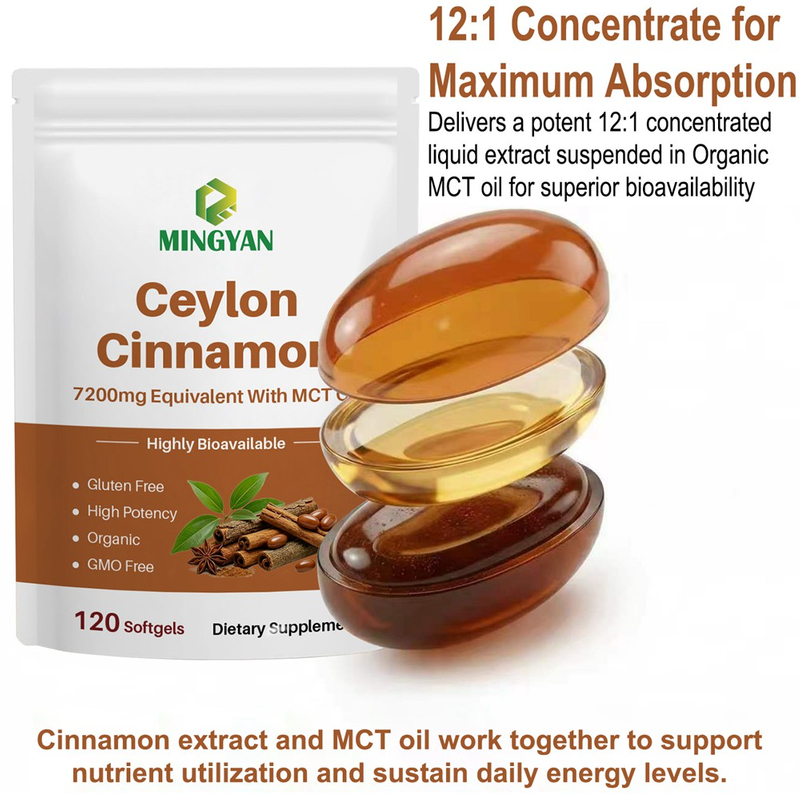
Our current Ceylon Cinnamon Extract Softgel uses Ceylon cinnamon bark extract with MCT oil in an oil-based softgel system. For this product direction, extract concentration, carrier volume, fill viscosity, shell compatibility and softgel size are evaluated together during development.
Manufacturer qualification should establish that the formulation and process have a coherent control strategy. Buyers do not need confidential encapsulation parameters merely to demonstrate that the supplier understands fill behavior, shell compatibility, unit configuration and finished-product specifications.
A manufacturer should be able to explain how component specifications, in-process controls, finished-product specifications, testing or examination and quality-control review work together. The objective is not to collect the largest possible folder. It is to understand how the approved product is controlled and how the customer-facing documents connect to that system.
U.S. Part 111 allows finished-product verification through selected specifications and an appropriate sampling strategy, together with supporting component and in-process controls. A stronger qualification question is: Which specifications are directly verified on finished batches, which are supported elsewhere in the control system, and how does quality control justify that strategy?
Applicable MMRs, BPRs, component records, quality-control documentation and other required manufacturing records.
Depending on confidentiality arrangements, this may include audits, controlled review, redacted examples, summaries or other evidence that the record system exists.
Approved specifications, COA or release information, agreed testing records, traceability information and other project documents defined in the commercial agreement.
Their existence is important to manufacturer qualification, but full records can contain proprietary manufacturing information. Define what evidence can be reviewed during qualification and what batch-level documentation your brand actually needs to receive.
Packaging evaluation should begin with the actual finished product rather than a generic assumption that one container is always best for softgels. The manufacturer should be able to connect the selected container-closure system, unit count and storage conditions to the product being proposed.
Do not ask a manufacturer to invent a standard shelf life during the sales conversation. A useful answer distinguishes between available stability support, project-specific testing that is still required and information that cannot yet be confirmed.
A manufacturer can be an important source of formula, serving, ingredient and packaging information during artwork development, but private-label arrangements should not assume that one commercial party automatically owns every regulatory responsibility.
The manufacturer should be able to supply or confirm the controlled technical information needed to reconcile Serving Size, ingredient quantity, package count and formula with final artwork.
For qualifying U.S. 403(r)(6) claims, the firm marketing the claim needs the required substantiation, disclaimer and applicable FDA notification. Private-label parties should define responsibility rather than assume it.
Ceylon species identity can support accurate identity-focused positioning when the supply chain and specification support it. It does not independently substantiate a diabetes, weight-management, liver-safety or other health outcome claim.
A useful partner distinguishes confirmed product facts from claims that still require substantiation or market-specific regulatory review. Be cautious when technical uncertainty is converted directly into outcome language simply to make the product easier to sell.
Supplier performance matters after approval as much as before it. Raw-material sources, specifications, formula components, packaging and production processes can change over the commercial life of a product. The relevant question is how changes that could affect your approved product are evaluated and communicated.
Avoid a clause so broad that every internal manufacturing adjustment becomes a customer approval event. Focus buyer notification on changes that could affect the agreed ingredient identity, formulation, product specification, label, package, quality attributes or market compliance.
For custom projects, we can evaluate formula concentration, compatible carrier systems, shell, size, color, serving configuration, package count and branded packaging according to the selected ingredient and target market.
The current product is a useful reference configuration, but manufacturer qualification should still be based on the specification and documentation agreed for the customer's actual project rather than assuming that every custom Ceylon cinnamon product uses the same formula.
Score every candidate using the same rule: 0 = not demonstrated, 1 = partially demonstrated or still open, 2 = clearly demonstrated for the exact project. The goal is not to create a regulatory certification score. It is to make supplier comparison consistent.
Do not turn qualification into a demand for every proprietary manufacturing record. Instead, separate the documents your brand needs to receive from evidence that can be reviewed during supplier qualification.
Destination market / sales channel: ______________________________
Required botanical identity: Cinnamomum verum / ______________________________
Plant part: ______________________________
Commercial extract / preparation: ______________________________
Proposed identity-verification approach: ______________________________
Extract ratio + basis: ______________________________
Actual extract amount per unit / serving: ______________________________ / TBD
Herbal equivalent, if used: ______________________________
Coumarin or other additional specification, if required: ______________________________ / N/A
Dosage form: □ softgel □ capsule □ request recommendation
Carrier / fill requirements, if fixed: ______________________________
Serving Size / units per serving: ______________________________
Package count / packaging: ______________________________
Required finished-product specifications / verification scope: ______________________________
Required customer-facing batch documents: ______________________________
Stability / shelf-life requirement: ______________________________
Desired label claims for responsibility review: ______________________________
Change-notification expectations: ______________________________
Open items requiring manufacturer recommendation: ______________________________
1. How is the proposed Ceylon cinnamon raw-material supplier qualified?
2. Which appropriate test or examination will verify dietary-ingredient identity before use?
3. How is the incoming component lot linked to the finished production batch?
4. How are extract ratio, herbal equivalent and actual extract amount defined in the proposed product?
5. If the project is a softgel, how will the selected Ceylon ingredient be incorporated into the fill and evaluated with the shell?
6. Which component, in-process and finished-product specifications will control this project?
7. Which finished-product specifications are directly tested or examined, and how does the overall verification strategy support the remaining specifications?
8. Which batch-level documents will our brand receive, and what additional evidence can be reviewed during qualification or audit?
9. What data support the proposed shelf-life statement for the actual formula and package?
10. Which ingredient, formula, packaging or specification changes trigger customer notification or review?
Start with the approved raw-material specification: it should define Cinnamomum verum, the intended plant part and commercial preparation. Then ask which identity-verification approach the manufacturer uses for that processed material and how the released component lot is traced into the finished production batch.
Not necessarily. Internal production records can use controlled component codes and lot identifiers. The important requirement for supplier evaluation is that those identifiers trace back to the approved Ceylon cinnamon specification and allow the material used in a finished batch to be identified.
Not as a universal rule. Coumarin can be included in the raw-material or finished-product control strategy when the selected ingredient, destination market, product positioning or risk assessment makes it relevant. When the specification requires a coumarin criterion, confirm the analytical method, acceptance limit and verification frequency.
A 12:1 ratio describes the relationship between starting botanical material and extract under a defined basis. The actual extract amount is the quantity of commercial extract physically used in the finished dosage unit or serving. A herbal-equivalent figure is a third quantity and should not be treated as the physical extract mass.
No. A supplier COA can be one part of the component-control system, but dietary-ingredient identity has its own verification requirement under U.S. Part 111. Reliance on a supplier COA for other applicable specifications also depends on supplier qualification, demonstrated COA reliability, appropriate documentation and quality-control review.
Those records are required elements of a U.S. dietary-supplement manufacturing system, but full copies are not automatically customer deliverables and may contain proprietary information. During qualification, confirm that the required record system exists, determine what can be reviewed under appropriate confidentiality arrangements and define the batch documents your brand will receive contractually.
Not necessarily. U.S. Part 111 allows a manufacturer to use an appropriate finished-batch verification strategy, including selected specifications and a sound statistical sampling plan, together with component and in-process controls. Ask the manufacturer to explain and document how its strategy supports all approved product specifications.
Responsibility should not be assumed from the words “private label” or “contract manufacturing.” For qualifying U.S. structure/function claims, the manufacturer, packer or distributor marketing the claim must meet the applicable requirements. Private-label parties should agree who owns claim substantiation, label review and any required notification before artwork is approved.
Normalize the Ceylon ingredient identity, extract basis, actual extract amount, dosage form, serving configuration, package count, testing or verification scope and customer-document package. Once those variables match, price becomes a much more meaningful comparison.
Tell us the destination market, Ceylon cinnamon ingredient or reference product, dosage form, serving target, packaging, estimated quantity, specification requirements and batch documents your project needs. We can review the scope and identify which items are ready for quotation and which still require technical confirmation.
Send Your Manufacturer Checklist →