Views: 0 Author: Site Editor Publish Time: 2026-07-12 Origin: Site
DHA in prenatal vitamins helps you have a healthy pregnancy. DHA is an omega-3 fatty acid. It is important for your baby’s brain and eyes. People who are pregnant or want to be pregnant need more DHA. Studies show that DHA levels go up during pregnancy. This is very important for the baby’s brain growth. Low DHA can cause more risk of brain problems in kids. You can see the science facts below:
Evidence Type | Description |
|---|---|
Neurodevelopment | DHA builds up in the baby’s brain and helps the brain and nerves work. |
Maternal DHA Levels | The amount of DHA in the mother’s blood goes up during pregnancy, especially in the second trimester. |
Developmental Outcomes | Low DHA in mothers links to higher chances of brain problems like ASD and ADHD. |
You get many good things from taking prenatal vitamins with DHA.
DHA helps your baby's brain and eyes grow well. You need enough DHA for your baby to be healthy.
Prenatal vitamins with DHA give you this nutrient. This is helpful if you do not eat much fish.
Try to get 200-300 mg of DHA each day. Ask your doctor what amount is best for you.
Take DHA supplements early in pregnancy. This helps your baby's growth the most.
Pick a prenatal vitamin with DHA. Make sure it also has folic acid and iron for your health.
You might ask why DHA in prenatal vitamins matters. DHA means docosahexaenoic acid. It is an omega-3 fatty acid. DHA has a special chemical shape. It has 22 carbon atoms and 6 double bonds. This shape lets it move easily in cell membranes. DHA is found in the brain’s gray matter. It makes up about 8% of the brain’s weight. DHA is up to 40% of the polyunsaturated fatty acids in gray matter. In the frontal cortex, DHA is about 15% of all fatty acids.
Here is a table that shows how DHA compares to other omega-3 fatty acids:
Fatty Acid Name | Chemical Structure | Classification |
|---|---|---|
α-linolenic acid (ALA) | 18:3n-3 | Omega-3 |
Stearidonic acid (SDA) | 18:4n-3 | Omega-3 |
Eicosapentaenoic acid (EPA) | 20:5n-3 | Omega-3 |
Docosahexaenoic acid (DHA) | 22:6n-3 | Omega-3 |
Docosapentaenoic acid (DPA) | 22:5n-3 | Omega-3 |
DHA is one of the important omega-3 fatty acids. Your body makes DHA in steps. ALA turns into SDA. SDA changes into ETA. ETA becomes EPA. EPA turns into DPA. DPA finally becomes DHA. This process is slow and not very good, especially when you are pregnant.
DHA in prenatal vitamins gives your body what it needs for pregnancy. You need DHA because it helps your baby’s brain and eyes grow. During pregnancy, your body sends DHA to your baby. This helps build the central nervous system. Maternal DHA levels go up during pregnancy, mostly in the second trimester. This time is very important for brain growth.
DHA helps your baby’s brain work and grow. It helps with learning, seeing, and moving. Low DHA during pregnancy can cause problems. You may have a higher risk of preterm birth. If your DHA drops, your baby may not grow well in the womb. DHA deficiency may also link to microcephaly. Some studies show low omega-3 can cause more sadness during pregnancy.
Tip: Make sure you get enough DHA in prenatal vitamins to help your baby grow.
DHA in prenatal vitamins is very important for pregnancy. You may not get enough DHA from food. Most people eat less fish or seafood, which have DHA. Prenatal vitamins with DHA give you a good source. You absorb DHA best with meals that have healthy fats, like avocado or nuts.
Prenatal vitamins have DHA because it helps your baby’s brain and eyes. Health groups say you should eat DHA-rich foods, like fish. The American Academy of Pediatrics suggests eating fish with DHA 1–2 times a week. The 2020 Dietary Guidelines for Americans recommend 8–12 ounces of seafood each week. This gives you 250–400 mg of omega-3 fatty acids. But you may not get enough DHA from food alone. Prenatal vitamins with DHA make sure you get 200–300 mg daily. This helps your baby’s brain and eyes. DHA also lowers inflammation and helps you feel well during pregnancy and after.
Note: Picking a prenatal vitamin with DHA helps you get the nutrients you need and supports your baby’s growth.
You give your baby a strong start when you get enough DHA during pregnancy. DHA is one of the most important fatty acids for your baby’s development. Your body sends DHA to your baby, especially in the last trimester. This is when the brain grows quickly and the eyes form. DHA builds the structure of the brain and helps the retina in the eyes work well. It supports the growth of the spinal cord, too.
Doctors know that DHA helps your baby’s brain and eyes develop. Research shows that DHA is a key part of the retina and helps your baby see clearly. When you take prenatal vitamins with DHA, you help your baby’s development in many ways. Babies whose mothers took DHA during pregnancy often have better health at birth and handle stress better.
Here is a table that shows how DHA helps your baby:
Benefit Area | How DHA Helps |
|---|---|
Brain | Supports growth and new connections |
Eyes | Builds retina and improves vision |
Spinal Cord | Helps nerves send signals |
Cognitive Skills | May improve attention and learning |
DHA is important for fetal development. It helps your baby’s brain triple in size between weeks 20 and 40. You help your baby’s development by making sure you get enough DHA.
DHA is not just for the brain and eyes. It also helps the nervous system and thinking skills. Your baby’s spinal cord needs DHA to send signals from the brain to the rest of the body. DHA helps the brain make new cells and connections. This is important for learning, memory, and movement.
Some studies show that when you get enough DHA, your baby may have better attention and problem-solving skills. Other research says the benefits are small, but many doctors still recommend DHA for healthy fetal development. Higher DHA levels in mothers link to better thinking and movement in children. You help your baby’s development by choosing a prenatal vitamin with DHA.
Tip: Start taking prenatal vitamins with DHA early in pregnancy to support your baby’s brain, spinal cord, and nervous system.
You also benefit from DHA during pregnancy. DHA helps your body stay healthy and lowers the risk of problems. Omega-3 fatty acids like DHA keep your uterus stable and reduce swelling. This can lower the chance of early labor. When you get enough DHA, you may feel better and have less sadness or worry after your baby is born.
Low DHA can cause problems for you and your baby. If you do not get enough, you may have a higher risk of preterm birth or your baby may not grow well. Some studies show that low DHA links to smaller head size in babies and more risk of mood problems for mothers. DHA helps lower the risk of preeclampsia and supports healthy blood flow.
Here are some benefits of DHA for you and your baby:
Reduces the risk of preterm birth
Supports healthy brain and eye development
May improve your mood during and after pregnancy
Helps your baby have a healthy birth weight
You support your health and your baby’s development when you choose a prenatal vitamin with DHA. Make sure you talk to your doctor about the best way to get enough DHA during pregnancy.
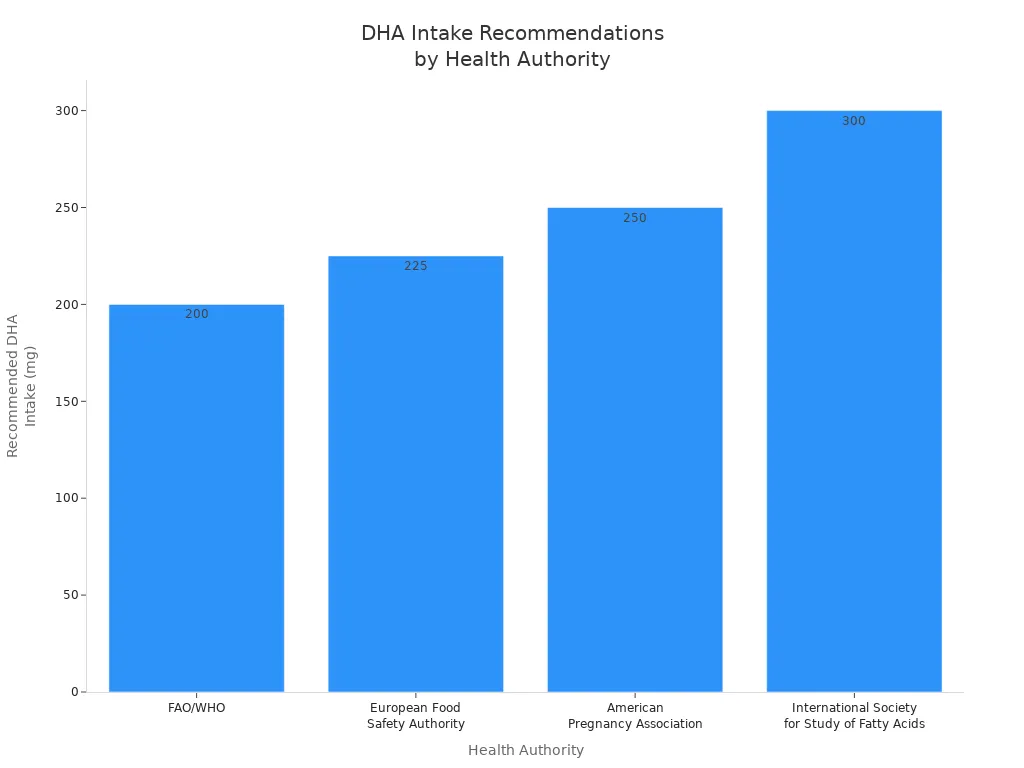
You need enough DHA when you are pregnant. This helps your baby grow well. Most health groups say you should get 200 to 300 mg every day. You can find DHA in fish, eggs, and some foods with extra DHA added. If you do not eat much seafood, you can take a prenatal vitamin with DHA. Some experts think you may need more for brain growth or if you might have your baby early. You could need up to 1000 mg, but only if your doctor says so.
Here is a table that shows what different groups recommend for DHA:
Organization | Recommended DHA Intake |
|---|---|
FAO/WHO | At least 200mg DHA |
European Food Safety Authority | 200-250mg DHA + EPA combined |
American Pregnancy Association | 200-300mg DHA minimum |
International Society for the Study of Fatty Acids and Lipids | 300mg DHA minimum |
You can also look at a chart that compares how much DHA these groups say you need:
It is best to start taking DHA early in pregnancy. Most doctors say to begin between 10 and 16 weeks. You should keep taking a prenatal vitamin with DHA the whole time you are pregnant. After 20 weeks, you might need 300 to 600 mg each day. Taking DHA early helps your baby’s brain and eyes grow. If you eat fish and eggs, you might get enough DHA. If you do not, a supplement can help you.
Tip: Start your prenatal vitamin with DHA as soon as you want to have a baby.
Many health groups say pregnant people should take DHA. The American College of Obstetricians and Gynecologists, American Academy of Pediatrics, and March of Dimes all say to get 200 to 300 mg every day. You can get this by eating 8 to 12 ounces of seafood with low mercury each week. If you do not eat enough fish, you can use a prenatal vitamin with DHA. The World Health Organization and European Food Safety Authority agree with these rules.
You should also get choline and vitamin d in your prenatal vitamin. Choline helps your baby’s brain and nerves. Vitamin d helps bones and the immune system. You can find choline in eggs and meats. Vitamin d is in milk with extra vitamins and from sunlight. Eating a good diet with choline, vitamin d, and DHA helps your baby start life strong.
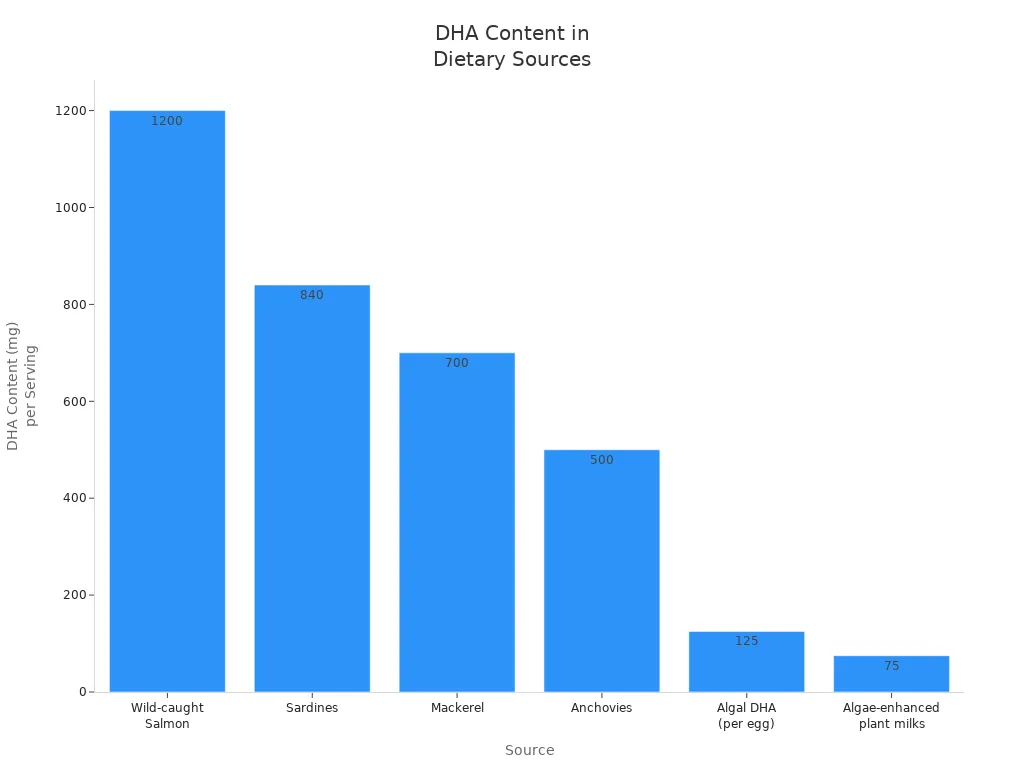
You can get DHA from both food and supplements. Fish like salmon, sardines, mackerel, and anchovies have the highest DHA. Eggs with added algae and plant milks with algae also give you DHA if you do not eat fish. Seaweed and nori mostly give you another omega 3 called ALA, not DHA. Your body does not change ALA to DHA very well.
Here is a table that shows how much DHA you get from different foods:
Source | DHA Content (mg) per Serving | Notes |
|---|---|---|
Wild-caught Salmon | 1200 | High in DHA, but limited consumption due to mercury. |
Sardines | 840 | Excellent source of DHA. |
Mackerel | 700 | Rich in DHA. |
Anchovies | 500 | Good source of DHA. |
Algal DHA (fortified foods) | 100-150 (per egg) | Plant-based option for vegetarians/vegans. |
Algae-enhanced plant milks | 50-100 | Alternative for non-fish eaters. |
Seaweed and Nori | Minimal | Primarily provide ALA omega-3s instead. |
You absorb DHA from fish and supplements well. If you do not eat fish, you can use DHA supplements or a prenatal vitamin with DHA.
Fish oil gives you DHA, but you must watch for mercury. Mercury can harm your baby’s brain. Choose fish with low mercury like sardines, salmon, and anchovies. Avoid big fish like swordfish and king mackerel. If you use fish oil, pick brands that test for mercury and other toxins.
Tip: Always check the label for “purified” or “mercury-free” when you buy fish oil or prenatal vitamins.
You should look for a prenatal vitamin that has DHA. Check the label for at least 200 mg of DHA. Some prenatal vitamins use fish oil, others use algae. Algae-based DHA works well for vegetarians and people who do not eat fish. Make sure your prenatal vitamin also has other important nutrients like folic acid, iron, and choline.
Read the label for DHA amount.
Choose algae-based DHA if you do not eat fish.
Pick a trusted brand that tests for purity.
Ask your doctor if you need extra DHA supplements.
Note: A prenatal vitamin with DHA helps you and your baby get the right nutrients for healthy growth.
You play a key role in building a healthy pregnancy. DHA helps your baby’s brain and eyes grow strong. It also supports your own health. You cannot make DHA on your own, so you need to get it from food or supplements. Most experts suggest you take at least 200 mg of DHA every day.
DHA improves your baby’s thinking and vision.
It lowers the risk of early birth and helps you feel better after pregnancy.
You should choose foods or prenatal vitamins with DHA and talk to your doctor for advice.
Making informed choices about DHA gives you confidence and supports a healthy pregnancy for you and your baby.
You may increase the risk of early birth or low birth weight. Your baby’s brain and eyes may not develop as well. You can talk to your doctor if you worry about your DHA intake.
You can choose algae-based DHA supplements. Some plant milks and eggs have added DHA. Regular plant foods like flaxseed give ALA, not DHA. Your body does not change ALA to DHA well.
Yes, you can take DHA with your prenatal vitamin. Many prenatal vitamins already include DHA. Always check the label and ask your doctor before adding extra supplements.
You should keep taking DHA throughout your pregnancy. Many doctors suggest you continue while breastfeeding. DHA supports your baby’s brain and eye growth after birth.